





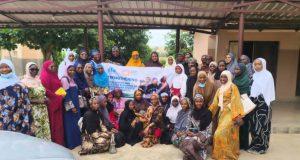
Women human rights defenders, journalists and advocates in Nigeria are calling for stronger digital protection measures as cases of online harassment, cyberstalking, impersonation and other forms of abuse against women increase.
The women made the call at the end of a two-day digital safety workshop organized by the Centre for Information Technology and Development, with support from the Association for Progressive Communications.
The workshop was held under CITAD’s Strengthening Digital Safety and Collective Resilience for Women Human Rights Defenders project and brought together women involved in human rights advocacy, journalism and community work from Bauchi and Jigawa.
Participants were trained to identify, prevent and respond to digital threats, including online harassment, cyberstalking, impersonation and image-based abuse.
They also learned how to report harmful content, preserve digital evidence and strengthen the security of their online accounts and personal information.
Hajara Muhd, a participant from Bauchi, said the workshop broadened her understanding of digital safety.
“I have learnt that digital safety is not only about having a strong password. It is also about being careful with the information we share, the people we interact with online and knowing what to do when we experience harassment or threats,” she said.
Hajara said the practical training would help her become more cautious about her online activities and better prepared to respond to digital abuse.
Lucy Goteng, a participant from Dutse, said the workshop helped her understand the seriousness of online harassment and the importance of documenting incidents.
“Before now, I used to see some forms of online harassment as something we should simply ignore. But I have learnt that cyberstalking, impersonation and other forms of abuse can affect our safety and wellbeing, and there are steps we can take to document and report them,” Goteng said.
She said the session on digital evidence was particularly important because victims of online abuse could inadvertently delete messages, posts or other information that could help establish what happened.
Maryam Bello, another participant from Bauchi, said the training had made her more conscious of protecting her privacy and personal information.
“The training has made me more conscious of my privacy and the way I use social media. I have learnt about protecting my accounts, handling online harassment and the importance of keeping evidence when something happens,” Bello said.
She also welcomed the emphasis on self-care and organizational support, saying women facing online attacks should not be left to deal with the consequences alone.
The workshop featured practical group exercises based on situations women human rights defenders and journalists could encounter online.
Participants examined scenarios involving harassment, cyberstalking, impersonation and image-based abuse and discussed ways to respond, document incidents, report harmful content and seek support.
The training also introduced participants to Reportrix, an alternative reporting mechanism that provides another channel for reporting and following up on incidents.
The sessions highlighted the potential consequences of digital attacks beyond the online environment, including emotional distress, reputational damage, threats to physical safety and reduced participation in public conversations.
Participants were encouraged to adopt preventive measures such as stronger account security, privacy-conscious online behavior, careful management of personal information, evidence preservation and timely reporting.
The workshop also emphasized collective action and stronger organizational support for women human rights defenders, particularly in cases involving coordinated harassment or threats.
The organizers said women’s ability to use digital platforms safely was essential as the platforms continued to play an important role in advocacy, journalism and civic participation.
The workshop ended with participants expressing greater confidence in identifying digital threats and responding to online abuse.