

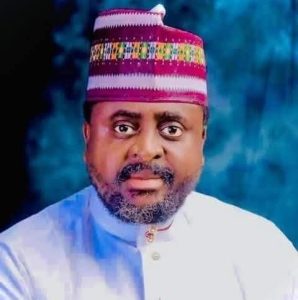
By Dahiru Hassan Kera
History has a way of separating those who merely occupy positions of authority from those who use the opportunity to make a difference in the lives of the people they represent.
Political offices come with their privileges, but the true measure of leadership lies in what the people remember long after the occupant has left office.
For some, the end of a political tenure marks the beginning of a gradual disappearance from public consciousness; for others, their leadership continues to find expression in the lives they touched, the opportunities they created and the interventions that remain part of the people’s collective memory.
This is where the story of Abubakar Abdullahi Lado Suleja can be situated. For a politician whose public service in Suleja, Gurara and Tafa was characterised by educational scholarships, youth empowerment, agricultural support and direct welfare interventions, the conversation about his political future cannot be divorced from the record of his past.
Lado’s interventions in education, vocational training, agriculture and welfare provide a basis for understanding why his name continues to feature in discussions about grassroots representation in Niger State.
Perhaps one of the most compelling aspects of Lado’s record is his investment in education, particularly opportunities for young people from families that might otherwise struggle to finance higher education.
In a society where the financial burden of schooling has pushed many promising students to the margins, a scholarship can represent the difference between a dream deferred indefinitely and an opportunity to acquire the skills needed to change one’s circumstances.
In November 2015, media reports documented how Lado, then representing Suleja, Gurara and Tafa in the House of Representatives, awarded foreign scholarships to 12 undergraduates from the constituency to study at Noida International University in India.
Their courses included General Nursing and Midwifery, Physiotherapy, Biotechnology and Civil Engineering, fields with potential relevance to healthcare delivery and technical development.
The intervention was followed by further scholarship announcements. In November 2016, Lado sponsored 18 students to study for five years at Al-Azhar University in Egypt.
There were also scholarship opportunities for students attending the Newgate College of Health Technology in Minna and specialised optical technology training at the Federal Medical Centre in Birnin Kebbi.
These interventions speak to a fundamental responsibility of representation: expanding opportunities for people whose talents might otherwise remain constrained by poverty. The lasting value of such programmes lies not merely in the number of students sponsored, but in their eventual completion of studies, professional development and contribution to society.
Education alone cannot resolve the challenges facing a constituency where unemployment, underemployment and limited access to capital continue to place pressure on young people.
This is why the emphasis on vocational training and practical empowerment in Lado’s programmes was particularly important.
In January 2016, Lado announced arrangements to train 1,000 youths drawn from the 30 wards of his constituency through the Nimble Youth Empowerment and Development Initiative.
The training covered practical trades, including tailoring, soap-making, baking, shoemaking and hairdressing. Some 40 youths also travelled to China for a four-month professional training programme in agricultural skills.
In May 2016, reports also indicated that more than 4,000 people had benefited from entrepreneurial empowerment during the preceding year. These initiatives reflected an understanding that young people needed more than promises; they needed practical skills and opportunities to build sustainable livelihoods.
The challenge for any future programme is to extend such interventions through improved access to markets, business finance and mentorship.
Lado’s interventions also extended to agriculture, a sector that remains central to the survival of many rural households.
Farming determines whether the coming months will bring some measure of stability or deepen an already difficult economic situation, while the cost of fertiliser, seedlings and other farm inputs can determine the extent to which a farmer is able to cultivate available land.
In May 2016, Lado distributed five trailer-loads of fertiliser and other agricultural inputs to farmers across his constituency. The items included seedlings, wheelbarrows, insecticides, sprayers and farming implements.
The distribution was intended to reach communities through their wards, with traditional leaders and elders involved in the process.
Several transformers were also distributed to communities, with the intention of extending electricity access to about 30 communities. Communities that benefitted from the continue to enjoy the facilities to this day.
These initiatives reflected the importance of responding to the actual circumstances of the people.
Agricultural support can reduce production costs and strengthen household food security, while reliable electricity can improve opportunities for small businesses, workshops and other economic activities.
There is also the more immediate side of constituency representation: assistance to people whose circumstances leave little room to wait for long-term development programmes to produce results.
In April 2021, Lado distributed cash to constituents during Ramadan, with the amount reported at approximately ₦50 million.
Recipients reportedly received sums ranging from ₦50,000 to ₦1 million, providing relief to beneficiaries across Suleja, Tafa and Gurara at a time when many households needed additional support.
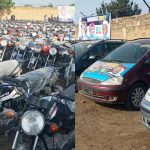
In 2018, Lado distributed school materials for public-school pupils, built boreholes, streetlights, potable water, support for widows and the provision of tricycles, bicycles and other items intended to help young people earn a living.
These initiatives add another dimension to the picture of a politician whose public engagement extended beyond legislative business.
Cash assistance cannot replace functional public services, just as the distribution of equipment cannot substitute for an economy that creates sufficient opportunities. Nevertheless, welfare interventions can provide immediate relief when directed at people who need it most.
Lado’s record suggests an appreciation of the need to respond to both immediate hardship and longer-term development.
His political journey, however, provides a reminder that electoral success is never permanent. After serving two terms in the House of Representatives, Lado lost his bid for a third term in the 2023 general election to Adamu Tanko Lokoja of the Peoples Democratic Party.
The defeat was a setback, demonstrating that a record of constituency interventions does not automatically guarantee electoral victory.
If Lado is to make a compelling return to the centre of public life, his strongest argument will be the ability to connect his previous interventions to a more ambitious and accountable programme for the future.
Scholarships can be expanded into sustained educational support; vocational training can be connected to employment and access to capital; agricultural assistance can be strengthened through improved productivity and market access; and welfare programmes can be organised to reach vulnerable households more transparently.
Lado Suleja’s record in education, vocational empowerment, agricultural support and welfare offers material with which to make the case for his continued relevance. It also creates an obligation to demonstrate that the experience acquired in public office can be translated into a more effective response to the present needs of the people.
Perhaps Lado’s electoral loss was an opportunity for constituents to taste another pie and decide for themselves which one tastes better. From the calls for his return, it would appear that what the present is offering is not exactly at par with the good Lado days.
However, the return of the people’s hope must mean more than the return of a familiar political name. It must mean a renewed relationship between leadership and the people, one in which past interventions are acknowledged, shortcomings are confronted and future commitments are measured by results rather than promises.
For Lado Suleja, the opportunity to reclaim public confidence rests on that understanding.
His previous service provides a foundation on which to build, but the future will ultimately be determined by the quality of the vision he presents and the sincerity with which he pursues it.
The people of Suleja, Gurara and Tafa deserve representation that remembers where it came from, understands where the people are today and has the determination to take them somewhere better.
Kera, a Journalist writes from Abuja.