





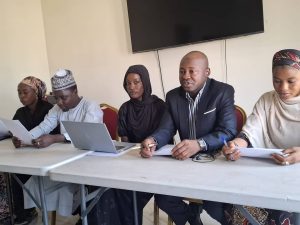
The Centre for Information Technology and Development (CITAD) has called for the integration of gender equity, disability inclusion and environmental sustainability, in Nigeria’s digital transformation agenda.
The Project Lead Officer, Greening and Feminist Centering of the National Digital Transformation Agenda, Ms Fatima Babakura, made the call during a press briefing in Kano.
Babakura said the initiative was part of the centre’s ongoing advocacy project implemented with support from the Association for Progressive Communications (APC).
She said it is aimed at promoting socially inclusive and environmentally responsible digital development.
She noted that although Nigeria’s digital transformation was often described as successful due to infrastructure expansion and increased adoption of digital technologies, such progress does not guarantee equitable distribution of digital opportunities.
“Digital transformation is shaped by political and economic decisions that determine who benefits, who is excluded and whose realities are prioritised in policy design and implementation,” she said.
According to her, inequalities persist within Nigeria’s digital ecosystem, with rural communities, women, and vulnerable persons in conflict-affected areasz facing multiple barriers to digital participation.
She listed factors such as affordability challenges, limited access to digital devices and connectivity, language barriers, safety concerns and exclusion from policy processes, as major challenges confronting vulnerable groups.
Babakura described gender inequality as a critical concern, noting that women’s exclusion from the digital economy is largely driven by limited access to digital tools, high cost of data, online harassment, cultural restrictions and policies that fail to reflect lived realities.
She emphasised that digital inclusion must extend beyond connectivity to include safe online spaces, digital skills development, mentorship and culturally responsive approaches to empower women.
The project lead officer also highlighted funding disparities in the digital economy, stating that women-led and community-based digital initiatives often struggle to access capital and institutional support.
She added that persons with disabilities remain largely excluded due to inaccessible infrastructure, limited assistive technologies and weak representation in governance and planning processes.
Babakura further expressed concern over environmental implications of digital expansion, noting that communities with weak regulatory protection often bear environmental costs such as electronic waste and resource exploitation.
She consequently, underscored the need to integrate climate and environmental justice into digital policy frameworks to prevent ecological vulnerability and social harm.
Meanwhile, she emphasised the role of civil society organisations, community technology hubs, the media and advocacy networks in promoting inclusive digital policies and amplifying marginalised voices.
She urged policymakers and regulatory institutions to review Nigeria’s digital policies to ensure equity, gender justice, disability inclusion and environmental sustainability across all levels of implementation..
She also called on development partners and private sector organisations to address funding gaps by supporting women-led, disability-inclusive and community-driven digital initiatives.
Babakura appealed to the media to promote accountability by highlighting issues of access, power and exclusion within Nigeria’s digital transformation process.
She reaffirmed CITAD’s commitment to evidence-based advocacy, inclusive dialogue and engagement with stakeholders, to ensure that all segment of society benefit from digital transformation. (NAN)