


By Abbas Bamalli
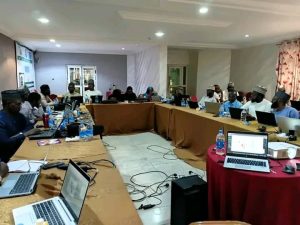
The Katsina State Government, has organised a four-day capacity building workshop to strengthen data management and visualisation in emergency/humanitarian context towards reducing multidimensional poverty.
The workshop, which commenced in Kaduna on Wednesday, was organised in collaboration with the United Nations Children Funds (UNICEF), Kano Field Office.
Gov. Dikko Radda, who was represented at the workshop by the state’s Statistician General, Prof. Saifullahi Sani, said that accurate data pinpoints where the most vulnerable children live.
According to him, it also identifies communities without access to safe water, and guides decision-makers on how limited resources can save greatest number of lives.
He noted that without data, even the best intentions could miss their target, stressing that information, not assumptions, must drive humanitarian response and development planning.
“Katsina, like many parts of Nigeria, continues to face overlapping challenges such as insecurity, climate-related shocks, food and nutrition crises, disease outbreaks, and gaps in access to quality education, healthcare, and safe water,” Radda said.
According to him, the government, placing data at the centre of emergency and humanitarian response, allows authorities to move from reaction to anticipation, from fragmented efforts to coordinated action, and from assumptions to evidence-based solutions.

The governor said, “The workshop is designed to equip participants with practical skills in data collection, integration, management, and visualisation.
“It will enable them to track deprivations across critical sectors, communicate evidence clearly to policymakers, allocate resources more efficiently, and strengthen accountability and coordination in crisis settings.
“The initiative aligns with the administration’s broader commitment to evidence-based planning, budgeting, and service delivery, as well as its pledge to fund data generation and strengthen state data systems.”
He urged the participants to engage actively and ensure that the knowledge gained was institutionalised within Ministries, Departments, and Agencies (MDAs), translating technical capacity into policies and programmes that deliver measurable improvements in people’s lives.
Reaffirming commitment to inclusive development and data-driven governance, Radda expressed confidence that working alongside partners like UNICEF, “the state can build stronger institutions, enhance resilience, and ensure that no one is left behind.”
Nura Shehu, UNICEF’s Planning and Monitoring Specialist, said the training aimed to deepen the participants’ understanding of data management, from foundational concepts to practical skills.
According to him, these skills are essential to improving the quality, reliability, and use of data for planning, monitoring, and programme implementation.
“UNICEF remains fully committed to supporting initiatives like this, which build the capacity of government partners and enhance systems for better outcomes for women and children.
“We see this training not just as a workshop, but as a continuation of our strong collaboration and shared dedication to strengthening data systems,” Shehu said.
NAN