




By Najib Sani
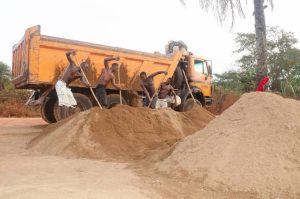
An environmentalist, Jamilu Sani, has warned that unregulated sand mining, especially “artisanal sand mining” is gradually destroying riverbanks, polluting drinking water and leaving behind degraded farmland across many communities.
Speaking in an interview on Monday, Sani, the Principal Consultant of Falconcrest Solutions Ltd, an environmental, agricultural and sustainable development firm, said the problem is not simply the removal of sand, but the gradual alteration of the river’s natural structure and stability.
“When miners remove large quantities of sand from the riverbed or dig too close to the riverbanks, they disturb the natural balance of the river.
“This can lead to bank erosion, undercutting and in some cases the collapse of sections of the riverbank,” he said.
He explained that over time, nearby land becomes unstable and the trees and vegetation that naturally protect the banks are lost.
According to Sani, excessive sand removal changes the natural depth, flow pattern and sediment balance of rivers and streams.
“It may create deep pits, alter the direction of water movement and increase erosion in other sections.
“Changes in riverbed levels and the removal of river sediments may influence how water moves between the river and surrounding groundwater systems.
“In some locations, mining pits may also collect stagnant water, causing environmental and public health concerns,” he said.
The expert added that contamination from fuel, engine oil, lubricants and waste from poorly maintained equipment further worsens the problem, increasing the cost and difficulty of obtaining safe drinking water for communities that depend on rivers and streams.
“For farmers, changes in water quality can affect irrigation, while fishers may experience declining fish populations or reduced catches”.
He said farmland is also seriously affected because mining involves removing the topsoil which contains essential nutrients and organic matter needed for crop production.
“Once that layer is removed, the land may lose its fertility. Mining can also leave deep pits and uneven surfaces, making the land difficult to cultivate.
“In some cases, the farmland may become unsuitable for agriculture unless proper rehabilitation is carried out,” he said.
While acknowledging that sand mining provides livelihoods for many people involved in excavation, loading and transportation, Sani said communities often pay a heavy price through dust, noise, damaged roads, erosion and loss of farmland.
Sani said the solution is not necessarily to stop sand mining completely, but to make it more organised and environmentally responsible.
He called on government to identify suitable areas for extraction, register and organise artisanal miners, and establish clear limits on where and how much sand can be removed.
“There should also be regular environmental monitoring, proper safety measures and rehabilitation of mined-out areas.
“Most importantly, miners should receive training and support to adopt better practices.
“This way, we can protect the environment while still allowing people to earn a living”, he said. (NAN).