



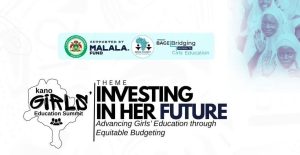
Bridge Connect Africa Initiative (BCAI), with support from the Malala Fund, on Friday hosted the Kano Girls’ Education Summit aimed at improving and promoting girls’ education in the state.
The summit, held under the Bridging Access to Girls’ Education(BAGE) project has the theme: ” Investing in Her Future: Advancing Girls’ Education through Equitable Budgeting.
The event brought together policymakers, education stakeholders, development partners, traditional and religious leaders, and civil society representatives to deliberate on advancing girls’ education through equitable financing and accountability.
The Executive Director of BCAI, Mr. Sani Muhammad, represented by the organisation’s Chief Operating Officer, Hajiya Fatima Musa-Aliyu, said the summit reaffirms a shared vision for inclusive and transformative education for every girl in Kano State.
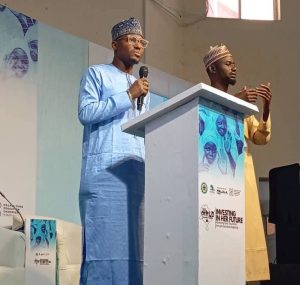
“At BCAI we believe that education is more than a policy priority it is a shared promise of dignity, opportunity, and hope,” Muhammad said.
He noted that BCAI’s work across Northern Nigeria had shown the transformative power of education, especially for girls, describing it as a door that opens not just for individuals, but for families and communities.
Muhammad explained that through partnership with the Kano State Government and the support of the Malala Fund, the summit aims to move the discussion from access to accountability and from policy to real transformation.
He said one of BCAI’s key contributions to this goal was the introduction of the Gender-Responsive Education Budgeting (GREB) Framework, designed to embed equity, transparency, and accountability into education financing.
“The true success of this work lies in its adoption and implementation by government, educators, and communities. The future we seek for girls in Kano must be built collectively through leadership, listening, and shared responsibility,” he added.
The Chief Executive Officer of the Malala Fund Nigeria, Ms. Nabila Aguele, represented by Sani Muhammad, commended the Kano State Government for adopting the GREB framework, describing it as a milestone in embedding gender equity in education financing.
“This is a vital step towards creating inclusive and resilient education systems that leave no girl behind,” Aguele said.
She reaffirmed the Malala Fund’s commitment to supporting the state and civil society partners in advancing girls’ education and ensuring that every girl in Kano has access to quality education and the opportunity to thrive.
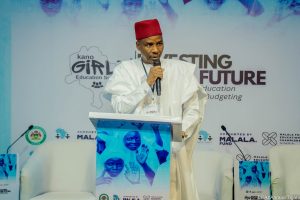
In his remarks, the Kano State Commissioner for Education, Dr. Ali Haruna-Makoda, reaffirmed the government’s commitment to equitable education, describing it as a tool for social and economic transformation.
He said that since the declaration of a state of emergency on education, the state had increased its education budget from 29.75 per cent in 2024 to 31.5 per cent in 2025.
According to him, the government has restored boarding facilities in girls’ secondary schools, recruited teachers, and provided free uniforms and school transport to enhance access and retention.
“We have also rehabilitated over 70 per cent of the girls’ shuttle buses, expanded infrastructure across all 44 local government areas, and prioritised privacy-friendly facilities such as toilets for female students,” Haruna-Makoda said.
He further disclosed that the government had approved the employment of over 16,700 school security guards across the 44 LGAs under the Safe School Initiative to ensure the safety of students.
The summit featured discussions on policy reforms, financing accountability, grassroots inclusion, and collaborative strategies for sustaining progress in girls’ education.
The BAGE project, implemented by BCAI with support from the Malala Fund, seeks to strengthen equitable education financing and promote sustainable reforms that enable girls in Kano to learn, lead, and thrive.