




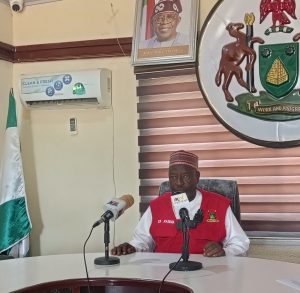
The Kano State Emergency Management Agency (KASEMA) has dismissed allegations by former Deputy Governor Aminu Abdussalam Gwarzo over the state’s response to flood victims, insisting that relief payments would commence soon.
The Executive Secretary of KASEMA, Alhaji Abdullahi Isyaku Kubarachi, made the clarification on Tuesday at a news conference in Kano.
Kubarachi described disaster management as a humanitarian responsibility rather than a political issue, saying the agency had adhered to transparent procedures in assessing victims and processing relief assistance.
He said Gov. Abba Kabir Yusuf had consistently supported the agency in carrying out rescue operations, humanitarian interventions, disaster risk reduction and protection of lives and property since assuming office.
According to him, the governor’s commitment demonstrates compassion and dedication to the welfare of all residents affected by disasters.
Responding to Gwarzo’s remarks, Kubarachi said it was surprising that the former deputy governor questioned the agency’s operations despite being familiar with its procedures while in office.
He alleged that after a fire outbreak in Gwarzo Local Government Area, KASEMA assessed victims and secured the governor’s approval for relief assistance.
According to him, the former deputy governor was requested to preside over the distribution of the relief materials in his community, but the exercise was delayed for more than seven months because he was unavailable.
He added that following appeals by affected residents, Gwarzo eventually informed the agency that he could not attend the event and nominated another government official to represent him.
Kubarachi also alleged that while serving as Commissioner for Local Government, the former deputy governor delayed the process of the billl establishing the State Emergency Management Agency for about eight months.
He said the delay arose during discussions on funding arrangements, including proposals for local government contributions to support the agency because disasters occur within local government areas.
On flood relief, Kubarachi explained that KASEMA’s operational procedure required affected local government councils to notify the agency before trained assessment officers, alongside partner organisations, visited affected communities to verify and document victims.
He said the findings were subsequently submitted to the governor for approval of appropriate interventions.
According to him, although 28 local government areas initially reported flood disasters, the governor directed that assessments should cover all 44 local government areas to ensure that no deserving victim was excluded from the intervention.
Kubarachi said the exercise resulted in the collection of data from affected victims across the state, while bank accounts were opened for more than 57,000 beneficiaries to facilitate direct payment of relief assistance.
He explained that the scale of the exercise and the need to ensure accurate data made it impossible to complete the process within a short period.
The executive secretary announced that all arrangements for the commencement of relief payments had been concluded and that disbursement would begin soon.
He attributed the delay to the governor’s official engagements outside the state rather than negligence or lack of commitment.
Kubarachi urged residents to avoid spreading rumours and unverified information on issues affecting the welfare of citizens.
He reaffirmed KASEMA’s commitment to transparency, fairness and integrity in the discharge of its responsibilities without discrimination.