

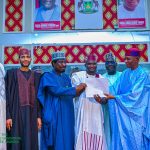



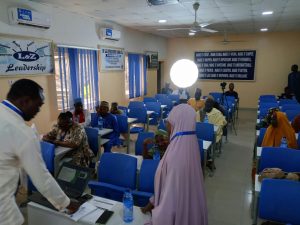
Not less than 15 pastoralists have been trained on fodder production to address the depletion of natural pasture and improve dairy farmers’ resilience to climate change.
The training, organised by L&Z Integrated Farms Nigeria Limited, in collaboration with the German development agency GIZ, commenced under the Green Harvest Initiative (GHI), is aimed at equipping pastoralists with the knowledge and practical skills to cultivate fodder, improve livestock productivity and ensure a sustainable supply of raw milk.
Ahmad Nuhu, Head of Partnerships at L&Z Integrated Farms, disclosed this during the commencement of a training-of-trainers programme for the selected pastoralists.
He said the exercise followed the success of the project’s first phase, which trained 400 farmers in climate-smart agriculture, prompting an expansion to accommodate more beneficiaries.
Nuhu explained that the 15 participants would be trained to step down the knowledge acquired to other farmers in their respective communities, particularly on fodder production.
He said the programme would include practical demonstrations at farms in Belmari and Kadawa, where participants would learn how to cultivate fodder, including Super Napier grass.
According to him, some farmers have already received seedlings to establish their own fodder farms, while community seed multiplication centres have been established across Bebe, Yukura and Dogua local government areas to improve access to planting materials.
“The idea is that after training them, they will go back to their respective communities and step down the training to their fellow farmers,” he said.
Nuhu added that improved fodder production would increase farmers’ productivity and, ultimately, the volume of raw milk available for collection by L&Z Integrated Farms.
He identified knowledge, practical skills and access to seedlings as the major benefits of the programme, stressing that pastoralists needed to prepare for the gradual depletion of natural pasture.
“Right now, they are getting free pasture all over the place, but they also know that year after year the pasture is depleting. So they need to start looking at the future of their enterprise,” he said.
He urged pastoralists, government agencies and other stakeholders to invest in building farmers’ capacity for fodder cultivation to prevent future shortages.
Nuhu warned that failure to act early could leave livestock farmers struggling to secure feed in the coming years, stressing the need for proactive investment in fodder production to sustain dairy farming and milk supply.