


By Musa Khalipha
Culture is a highly dramatised phenomenon across Africa. Death features prominently in that cultural drama whose actors and roles almost always come to life at the right moment and occasion.
The rehearsals, enactments and reenactments of the drama have been ongoing for ages, so that when Africans lose a loved one, the surviving loved ones are expected to be at the forefront of dramatising this grief.
It becomes an anomaly, however, when other people begin to dramatise this grief more vigorously than those primarily bereaved.
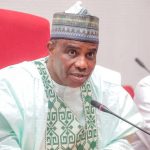
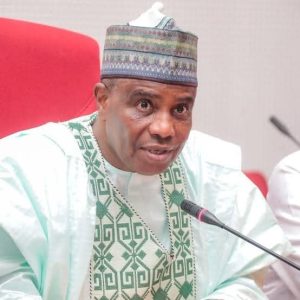
To put this cultural practice in perspective, we will say Sokoto State has allegedly lost over ₦117 billion. As a process of dramatising their grief, the state government set up a judicial commission of inquiry to investigate how, or whether, the state’s collective resources were properly managed or whether some of them suffered a rather unnatural death in the hands of those entrusted with their custody, in this case, the immediate past governor of the state and former Speaker of the House of Representatives, Rt. Hon. Aminu Waziri Tambuwal.
The commission, constituted by Governor Ahmed Aliyu’s administration in July 2023, was mandated to investigate the sale and auction of government assets, land allocations and other related transactions during Tambuwal’s administration between 2015 and 2023.
The panel was chaired by retired Justice Mu’azu Abdulkadir Pindiga, a former Chief Judge of Gombe State. Other members included Chief Jacob E. Ochidi, SAN; Alhaji Usman Abubakar; Barrister Lema Sambo Wali; and Alhaji Haliru Dingiyadi, while Barrister Nasiru Mohammed Binji served as secretary.
The commission’s terms of reference included examining the sale and auction of government assets, official vehicles, government houses, plants and machinery belonging to the state and local governments; ascertaining the bank accounts involved and the amounts realised from the transactions; and investigating land allocations across the state, including plots allocated in Sokoto New City.
It was also expected to examine government properties sold or auctioned and determine the circumstances surrounding the transactions and the utilisation of the proceeds.
Interestingly, after months of investigations and examination of official records, the panel submitted its report to the state government on February 3, 2026. Justice Pindiga announced findings alleging financial irregularities exceeding ₦117 billion, alongside alleged breaches of procurement procedures, non-compliance with extant laws and abuse of executive authority.
These remain reported findings of an inquiry, not a final judicial determination of criminal liability.
Now, while the panel has gone through the motions and submitted its report to the state government, a rather curious Tambuwal, whose administration was the subject of the investigation, appears to have become more agitated about the fate of the report than the people of Sokoto who are supposedly the primary beneficiaries of whatever accountability process the government has initiated.
Tambuwal’s agitation has manifested in a lawsuit against the Sokoto State Government, demanding access to the report of the commission of inquiry, which the government has yet to release publicly. The suit, marked SS/133/2026, was filed before Justice Mohammed Mohammed of the Sokoto State High Court, sitting as Court 6.
The defendants include Governor Ahmed Aliyu, the Attorney-General and Commissioner for Justice, Nasiru Binji, and the commission of inquiry.
At this point, we are forced to ask some pertinent questions: was Tambuwal notified of the panel’s proceedings, and was he invited to participate in the investigation? Did the commission communicate to him any undertaking that he would automatically receive a copy of the report upon its submission, or is his demand based on the fact that he participated in the proceedings and believes he has a right to know the findings made against his administration?
Now, I am no lawyer, so I will not pretend to understand the full legal merits of the lawsuit without examining the originating summons and the applicable provisions of the law. But I am an administrator, and I know that there is a difference between the conclusion of an inquiry, the submission of its report to the authority that constituted it, and the subsequent administrative and legal decisions that may follow.
The submission of a report does not, by itself, settle every question about its disclosure or the rights of persons affected by its findings.
This is where the matter becomes particularly interesting. Tambuwal was Speaker of the House of Representatives and, more crucially, governor of Sokoto State for eight years. He is therefore expected to have a reasonable grasp of how public institutions work, how investigations are conducted and how the business of government proceeds after an official report has been submitted.
This is why I find it rather astonishing that the dispute has now reached the courts, although the fact that he has filed a lawsuit does not, in itself, establish wrongdoing or prove that his demand is legally unfounded.
What, then, is the real issue? Is Tambuwal merely exercising what he considers a legitimate legal right, or is there a larger political calculation behind the urgency with which he wants the report released? Could he be anticipating damaging findings and seeking an opportunity to prepare his response, or does he genuinely believe that withholding the report violates his right to fair hearing? These are legitimate questions for public discussion, but they remain questions; speculation about his motives cannot substitute for evidence.
From what I have gleaned out of reports on the lawsuit, Tambuwal’s argument is that his participation in the inquiry and the potential adverse findings against him give him a legal basis to demand access to the report.
His position, supposedly rests on the principles of natural justice and fair hearing, including the opportunity to know and respond to allegations that may affect his rights or interests. But in real sense, that lawsuit makes him appear desperate and we may want to know why?
That is a legal argument the court must consider, rather than one that can be dismissed simply because the government has not publicly released the report.
Sincerely, this is an unusual turn in the controversy surrounding the report, not because a former governor has approached a court to challenge the non-release of an inquiry report, but because the public is now being drawn into a dispute over a document whose contents have not been officially released in full. It remains to be seen what Tambuwal hopes to achieve through that lawsuit, but if it was a plan to gaslight the people into a predetermined sympathy, then the plan may have failed.
For now though, It is for the court to determine the legal rights and obligations of the parties, not for political sympathies to decide who is entitled to what.
We can acknowledge, however, that the report, having been submitted on February 3, has remained in the hands of the state government without further action, maybe for too long. That delay deserves an explanation considering the original terms of reference gave the panel only three months to conclude the enquiry. Nobody can deny that.
If the commission was constituted to satisfy the public’s desire to know how the state’s resources were managed, then the government must explain what it has done with the report and why the process has taken this long. An inquiry whose findings remain inaccessible for months risks undermining the public confidence it was established to restore.
But the government’s delay and Tambuwal’s lawsuit are two separate issues, and neither should be used to erase the other. Tambuwal’s demand for access appears somewhat overzealous, but it must be noted that the state government also has a responsibility to account for the handling of the report.
The people of Sokoto are entitled to know what happened to their resources, while anyone against whom adverse findings are made is entitled to whatever procedural protections the law guarantees.
The business of Governing Sokoto state is very serious, that it would appear making a panel’s report a priority just doesn’t cut it. This is not to trivialise questions about public expenditure, asset disposal and the management of collective resources.
If the commission’s findings are sound, the government should be prepared to explain them and take whatever lawful action is warranted.
Ultimately, the people of Sokoto are the bereaved in this whole affair, if indeed public assets and resources were lost or improperly managed as alleged. They deserve to know, but they can be spared the political drama. They should be spared more any prolonged contest over who gets to read a report, and certainly more than allegations without a transparent account of what the investigation established.
Tambuwal has chosen to seek judicial intervention, and the government must answer within the law.
But while the two sides prepare for their legal contest, one question remains: could there be a hidden motive behind Tambuwal’s request for the report at this time? Again, when will the people whose resources allegedly suffered unnatural death, prompting investigation be allowed to mourn their dead in peace?
Musa writes from Sokoto