



Stakeholders in Nigeria’s renewable energy sector have urged the Federal Government to adopt a gradual approach to its proposed ban on the importation of solar panels and related accessories, warning that an immediate restriction could worsen the country’s electricity supply challenges.
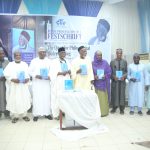
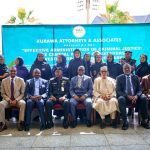
The call was made at a high-level multi-stakeholder policy dialogue on Nigeria’s proposed solar panel import policy, organised by the Centre for Renewable Energy and Sustainability Transition (CREST), Bayero University, Kano, in collaboration with the Global Initiative for Food Security and Ecosystem Preservation (GIFSEP), Solar Power Nigeria and other partners.
Speaking at the event, the Director of CREST, Prof. Nasir Isa Fagge, said the dialogue was convened to provide a platform for stakeholders to deliberate on the proposed policy and develop practical recommendations for its effective implementation.
Fagge said the initiative was in line with the Federal Government’s drive to promote local content in science, technology and manufacturing.
He noted that the outcome of the dialogue would be harmonised into a policy document to be submitted to the Federal Government to support evidence-based decision-making.
The Executive Director of Global Initiative for Food Security and Ecosystem Preservation GIFSEP, Dr David Michael, said the organisation became concerned following the government’s announcement of plans to ban the importation of solar panels, noting that millions of Nigerians now depend on solar energy as an alternative to the nation’s unreliable electricity supply.
According to him, Nigeria still relies heavily on imported solar panels and related components, making an outright ban premature.
He urged the Federal Government to adopt a phased implementation of the proposed policy while simultaneously investing in local manufacturing, technology transfer and capacity development to strengthen the domestic renewable energy industry.
Declaring the dialogue open, the representative of the Vice-Chancellor of Bayero University, Kano, Prof. Haruna Musa represented by Professor Amina Mustapha, said the engagement was timely and would contribute to the development of a sustainable renewable energy ecosystem in Nigeria.
She urged participants to make meaningful contributions that would enrich the policy document and support the formulation of a balanced and implementable national policy.
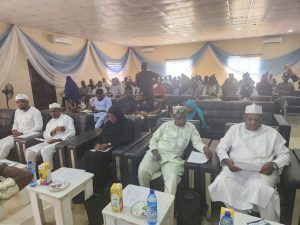
The dialogue meeting was attended by stakeholders on solar energy and environmental experts.